NBA Rebounds Props UK: Strategy, Stats and Key Markets
 Available in US
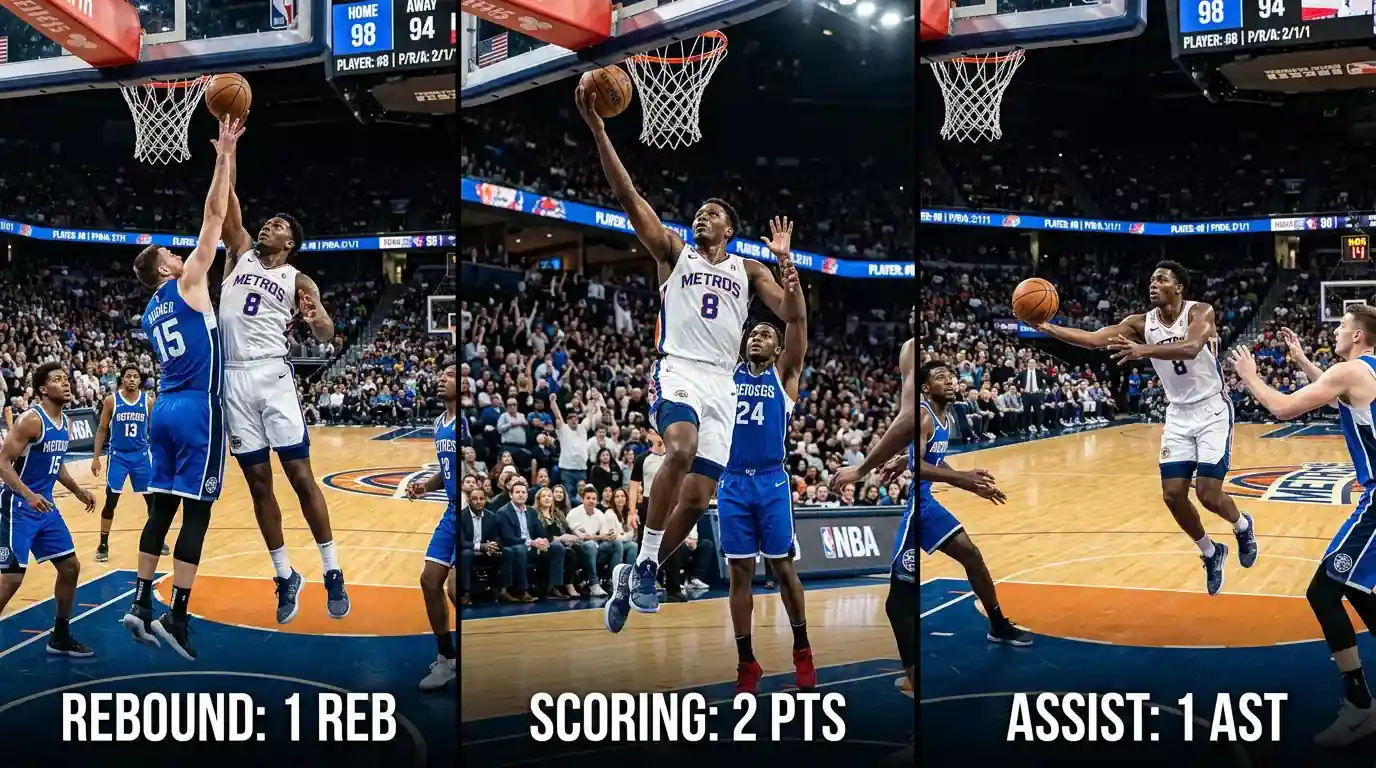
Rebounds Props Are the Most Underanalysed NBA Prop Market in the UK
I made more consistent money on rebounds props in my third year of doing this than in any other single market. Not because I was particularly clever about it, but because I was the only person in my circle who’d actually bothered to look at rebounding rate data before placing a bet. Everyone was piling into points props, where the lines are tightest and the competition most intense. Rebounds were sitting there, imprecisely priced, with the bookmaker’s model relying mostly on a player’s season average and not much else.
That inefficiency hasn’t entirely closed. Rebounds props remain less liquid than points markets at UK bookmakers, which means lines move more slowly and the window for spotting mispricings is wider. The analytical community that scrutinises scoring props intensely gives less attention to rebounding — and the pricing reflects that gap. For a disciplined bettor willing to do the research, this market has consistently offered better value than the crowded points lines.
The basic structure of the market is familiar: an over/under line on total rebounds for a specific player in a specific game. Offensive and defensive rebounds both count in the standard market, though some UK bookmakers also offer split markets on defensive rebounds alone. The standard total rebounds prop is where I focus most of my attention, because the liquidity is better and the settlement is cleaner.
Advanced Rebounding Stats That Predict Over/Under Results
Total rebounds per game is where most recreational bettors stop their research. It’s the wrong place to stop. Rebounding totals vary enormously with context — minutes played, team pace, opponent rebounding profile, and lineup configuration all influence the final number far more than a raw season average suggests.
Rebounding rate (REB%) is the foundational advanced metric here. It measures what percentage of available rebounds a player grabs while he’s on the floor, controlling for pace and minutes. A player who averages 9 rebounds in 35 minutes has a meaningfully different rebounding rate profile than one who averages 9 in 28 minutes — and that difference directly informs how I think about over/under lines. When a player’s rebounding rate is high but his minute restriction is keeping his average down, any expansion of his playing time is a strong over signal that the bookmaker’s line may not fully reflect.
Offensive rebounding rate and defensive rebounding rate tell different stories. A big man with a high offensive rebounding rate benefits from opponents’ made shots — games where the opposing team scores efficiently suppress his offensive boards. A player with dominant defensive rebounding rate is more predictable, because defensive rebounds are more about positioning and effort than luck. When I’m choosing between two borderline rebounds props, I favour the one driven by defensive rebounding rate over the one heavily dependent on offensive boards.
Professionally researched NBA player props show win rates of 55–58%, and rebounds markets — because they’re less efficiently priced than points markets — are where I’ve personally found the upper end of that range more reliably. The data advantage is larger when fewer people are competing on the same signal.
Opponent Rebounding Weakness: Finding the Right Matchups
The single biggest predictive variable for a rebounds prop — beyond the player’s own rate data — is the opponent’s front-court rebounding defence. Some teams leak offensive rebounds at an alarming rate; others are disciplined boxing-out units that minimise second-chance opportunities. Identifying where your target player sits in that matchup is the most actionable step in rebounds prop research.
I track opponent defensive rebounding rate (DREB%) as my primary matchup metric. A team in the bottom quarter of the league in opponent DREB% is effectively gifting extra rebounds to opposing big men and forwards. When a player with a high personal rebounding rate faces one of these leaky units, the combination points clearly toward the over. Conversely, when a dominant rebounder faces a team that clamps down on second-chance opportunities, that’s a legitimate reason to consider the under even if the line looks low on surface.
Lineup configuration at the time of the game matters too. Is the opponent playing small-ball lineups that shrink the front-court, creating more space for your target player to operate on the glass? Is your player’s own team going small, which may reduce interior opportunities? These in-game variables don’t always appear in the pre-game data, but checking injury reports for both teams’ front-court players before placing a rebounds prop bet is basic due diligence.
Pace compounds everything. A faster game means more possessions, more shots, more missed shots, and therefore more rebounding opportunities across the board. When two high-pace teams meet, rebounds lines deserve a second look if the bookmaker hasn’t fully adjusted for the expanded opportunity set. I’ve found pace differential between two teams — not just each team’s individual pace — to be one of the most reliably underweighted variables in rebounds prop pricing.
Common Mistakes UK Bettors Make on Rebounds Props
The most common mistake I see is betting rebounds props on centres without checking their minutes restriction status. Big men are the most likely players in any lineup to receive managed minutes — rest protocols, foul trouble, or backup rotation experiments can cut a centre’s playing time by 8–12 minutes without any announcement. That kind of minutes reduction doesn’t just lower the expected rebounds total; it can swing a near-certain over into a comfortable under. Always check the day-of injury report and pre-game press conference notes before placing a rebounds prop on a front-court player.
The second mistake is ignoring foul trouble context. A player who picks up two fouls in the first quarter will often sit extended periods, particularly in the first half. While this is unpredictable pre-game, the pattern of which players tend toward foul trouble — and against which opponent types — is worth knowing. A player with a habit of fouling out in physical matchups carries real ceiling risk on rebounds props, even if his rate data otherwise looks compelling.
Over-relying on recent form without checking whether that form was generated in a favourable rotation context is the third error. A player who pulled 14 rebounds in his last two games might have done so because a teammate was injured and he received extra minutes and a higher responsibility in the front-court rotation. If that teammate returns for this game, the line based on those recent games is almost certainly too high — and the under becomes the better play.
For a fuller picture of how to integrate rebounds analysis into a complete NBA prop betting strategy, the process of building a systematic research workflow pays dividends across multiple market types, not just rebounds.
Which advanced stat is most predictive for NBA rebounds props?
Rebounding rate (REB%) — which measures the percentage of available rebounds a player grabs while on the floor — is more predictive than raw totals because it controls for pace and playing time. Combining a player’s rebounding rate with the opponent’s defensive rebounding rate gives a much more reliable pre-game projection than simple averages.
How does pace of play affect rebounds prop lines?
Higher pace means more possessions, more shot attempts, and more missed shots — which directly increases the total pool of available rebounds in a game. When two fast-paced teams meet, rebounds lines across the board should be scrutinised for whether the bookmaker has fully priced in the expanded opportunity set. Pace differential between the two teams is often an underweighted variable.
Prepared by the nba Props Bets editorial staff.